
OBFS 2026 Annual Meeting Registration
The 2026 annual meeting will be held Sept. 14-18 at Schoodic Institute at Acadia National Park in Winter Harbor, Maine, USA.
The theme of this year’s meeting is “Holdfast".
Key details
Schoodic Institute is located in the homeland of the Wabanaki, People of the Dawn.
Schoodic Institute’s focus is understanding environmental change taking place in Acadia and beyond, and helping managers respond and adapt to change. Through rigorous research and strong partnerships, we develop successful models for engaging people of all ages in science and supporting researchers and educators. We are also creating professional pathways for early-career scientists, educators, and science communicators working in conservation.
We are Acadia National Park’s primary partner in science and education. Together, we manage the largest of 18 National Park Service Research Learning Centers in the United States.
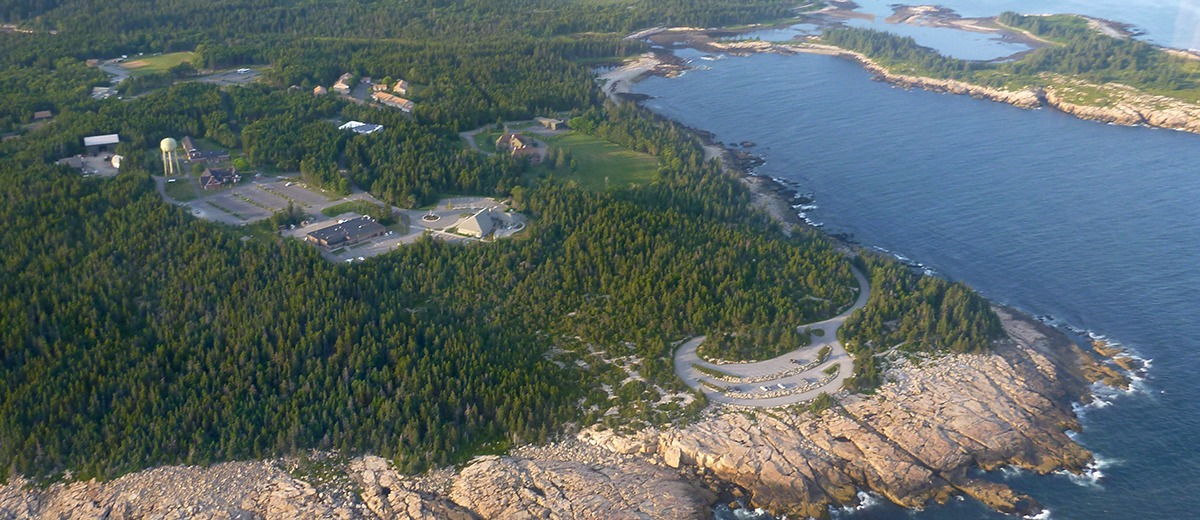
Schoodic Institute is located in Winter Harbor, Maine.
Airports
- Bangor International Airport (BGR) is located 1.25 hours from campus.
- Portland International Jetport (PWM) is 3.5 hours.
- Bar Harbor Airport (BHB) is one hour.
Arriving by Car
Please do not rely on rideshare options like Uber or Lyft due to very limited availability.
Most guests rent a car at the airport and make the drive to campus. We recommend carpooling! We will have a carpool spreadsheet available soon.
Onsite Beds
There is ample housing available onsite. Please see the Housing Options page for a complete list of options and pricing.
Area hotels
Please note: Offsite lodging will be in high demand due to fall color tourism. We recommend booking offsite lodging early to ensure availability.
Preliminary schedule
A detailed schedule will be available closer to the meeting.
Monday, Sept. 14 (Pre-Conference)
Tuesday, Sept. 15
- Field Trips
- Annual meeting begins at 4:30 p.m. (new start time)
- Evening plenary
Wednesday, Sept. 16
- Plenary talks
- Concurrent sessions
- Lightning talks, poster session and social hour
Thursday, Sept. 17
- Concurrent sessions
- Tours
- Auction and dance party
Friday, Sept. 18 (Departure day)
- Meeting adjourns
- Post-meeting workshops
Workshops will be held on Monday, Sept. 14 and Friday, Sept. 18, before and after the main portion of the meeting.
Optional field trips will be held on Tuesday, Sept. 15. Most are free. Please sign up for field trips when completing registration.
Save Our Summits Stewardship Hike (Sargent Mountain)
Time: 8 a.m.-2:30 p.m.
Cost: Free
Capacity: 17 people
Join us for a Save Our Summits participatory stewardship hike to the top of Sargent Mountain. Along the way, you’ll help carry restoration soil (as much or as little as you’d like) while learning about efforts to restore this unique subalpine ecosystem. The hike is 4.2 miles round trip on gravel and rocky, root-filled trail. Time includes drive time. Transportation is provided (1.25-hour van ride to the trailhead).
Guided Bird Walk (Schoodic Peninsula)
Time: 6-9 a.m.
Cost: Free
Capacity: 15 people
Join Schoodic Institute’s Forest and Wildlife Ecologist for a guided bird walk across the Schoodic Peninsula. We’ll look and listen for a mix of ocean and forest birds while exploring how this coastal landscape supports both. A relaxed, observation-rich walk with plenty of opportunities to share sightings and questions.
Schoodic Head Coastal Forest Hike
Time: Noon-4 p.m.
Cost: Free
Capacity: 15 people
Hike to the summit of Schoodic Head (440 feet above sea level) with Schoodic Institute’s CEO and a forest ecologist. This 4.5-mile route travels across pavement, gravel, and rocky, root-filled trail as we explore the structure and dynamics of Maine’s coastal forests. Expect equal parts conversation, scenery, and a bit of a workout.
Seaweed Exploration and Art (Intertidal Zone)
Time: 7:30-11 a.m.
Cost: $15
Capacity: 15 people
Join us at low tide to step into a world of vibrant, living color. We’ll explore the remarkable diversity of seaweeds—learning how to recognize them, what makes them unique, and the roles they play in coastal ecosystems. Along the way, we’ll gather specimens to bring back and turn into one-of-a-kind art.
Great Duck Island Field Station Visit
Time: 8:30 a.m.- 3 p.m.
Cost: $90
Capacity: 20 people
Travel offshore (one hour each way) to Great Duck Island aboard College of the Atlantic’s research vessel Osprey for a visit to the Alice Eno Field Research Station. This remote island has supported decades of research on seabirds and coastal ecosystems. We’ll explore the station, learn about ongoing and past research (including work on storm petrels and guillemots), and discuss the logistics—and value—of sustaining field science in an off-grid setting. Time includes drive time. Short carpooling to Frazer Point required.
Working Lobster Boat Tour
Time: 8:45-11:15 a.m.
Cost: $70
Capacity: 20 people
Join the crew of a working lobster boat for an up-close look at Maine’s iconic fishery. You’ll haul lobster traps, learn how the gear works, and keep an eye out for curious seals along the way. A hands-on glimpse into the rhythms—and realities—of working on the water. Time includes drive time. Short carpooling to the village of Corea required.
Abbe Museum Visit (Bar Harbor)
Time: 11:30 a.m. to 4 p.m.
Cost: $25
Capacity: 20 people
Visit the Abbe Museum in downtown Bar Harbor for a guided exploration of Wabanaki heritage, culture, and homelands. Through exhibits and multimedia storytelling, we’ll engage with Wabanaki perspectives—past and present—and consider how these narratives shape our understanding of place today. Time includes drive time. Carpooling to Bar Harbor required.
Each year OBFS hosts an auction to raise funds featuring unique and fun (or funny) items. Think handmade items, regional specialties, art, puns, kids' stuff, unique performances, professional services, science-y stuff, outdoor gear, amazing trips and experiences, field station swag, and more! Be creative!
If you cancel before Sept. 8, you'll receive a 95% refund. (The 5% covers credit card fees.)
If you cancel starting Sept. 8, you'll get a refund of your registration fee minus 5%, plus a $50 fee, and any non-refundable costs for field trips or workshops.
We recommend bringing the following items:
- Clothing that allows for layering
- Warm jacket, gloves and hat (especially if planning to be on a boat)
- Hiking or sturdy, closed-toe shoes
- Headlamp or flashlight. The campus is dark-sky friendly.
If staying onsite:
- Toiletries
- Hair dryer
- Sunscreen
- Coffee and filters (BYO coffee if you’re an early riser. Standard-size coffee makers are in on-site housing.)
Optional items you may want to bring, depending on your plans and interests:
- Hiking poles
- Binoculars or scope
- Camera
What not to bring
If staying onsite, all linens are provided.